
How cable blowing works
Fibre cable blowing, also called jetting, combines a machine-controlled cable feed with compressed air in a duct. The feed mechanism introduces the cable at the entry point while moving air helps carry it along the route.
This is an installation method for a cable and duct system that are compatible with one another. It does not create a new pathway through the ground. A continuous, suitable duct must already be in place, with access and permissions arranged.
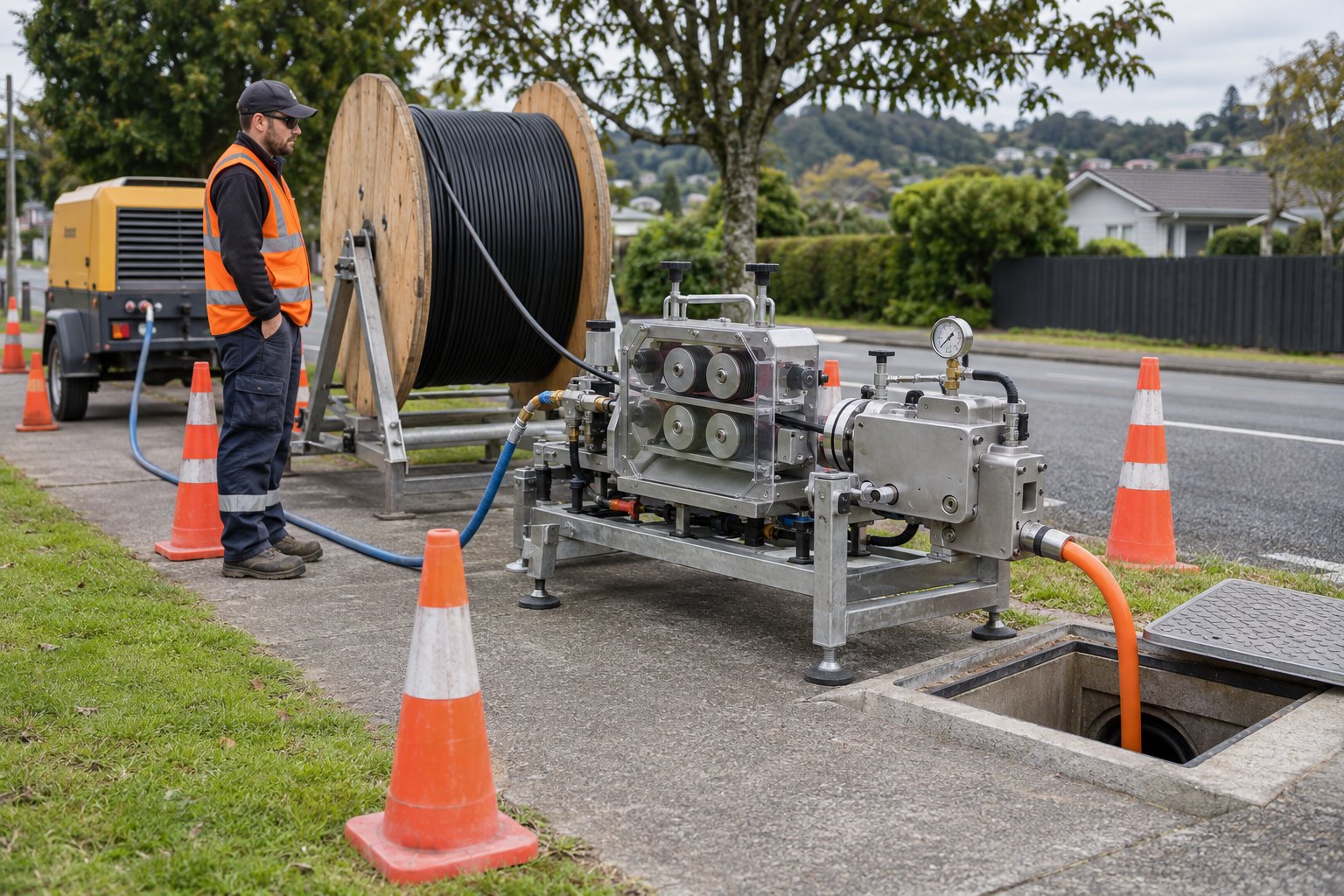
Generated illustration of a cable blowing setup, not a photograph of a Light Logic project or a specific machine owned by the company.
Fibre along streets and into the network
Street-route installations can involve substantial cable drums, blowing equipment, an air supply and several access locations. There is a practical sequence to coordinate: position the drum, establish the cable feed, prepare the duct connection, confirm the receiving point and communicate during the installation.
Light Logic can discuss cable blowing as part of a new fibre route or a defined section of backbone installation. The destination matters too: the cable needs sufficient length and a planned entry arrangement for the next chamber, closure or cabinet.
What makes a route ready?
- Known duct details: size, type, continuity and connection arrangements.
- Route condition: suitability checks for obstructions, water, debris, damaged sections or leaking joints, using methods appropriate to the duct system.
- A compatible cable: diameter, construction and manufacturer-approved installation limits.
- Usable access: safe equipment locations, workable entry and receiving points, and access along the route where needed.
- An agreed work area: responsibilities for permits, traffic management and public access established before site work.
Why there is no universal blowing distance
The achievable installation length depends on duct condition, bends, route profile, cable properties, air supply and the installation setup. A simple straight duct and a route with many bends do not behave the same way.
We assess the job rather than advertise a distance or speed that may not apply. Some routes may need staged installation or additional access. Pressure, feed and equipment settings must suit the cable, duct system and manufacturer guidance.
After the cable is in
The job continues with cable protection at entry points, managed slack, fibre identification and the agreed connection work. Splicing and termination create the optical path; testing checks its performance.
Tell Hayden the approximate length, duct sizes, cable details, number of bends or chambers and whether the duct has been checked. Missing information can be identified as part of the scope discussion.